
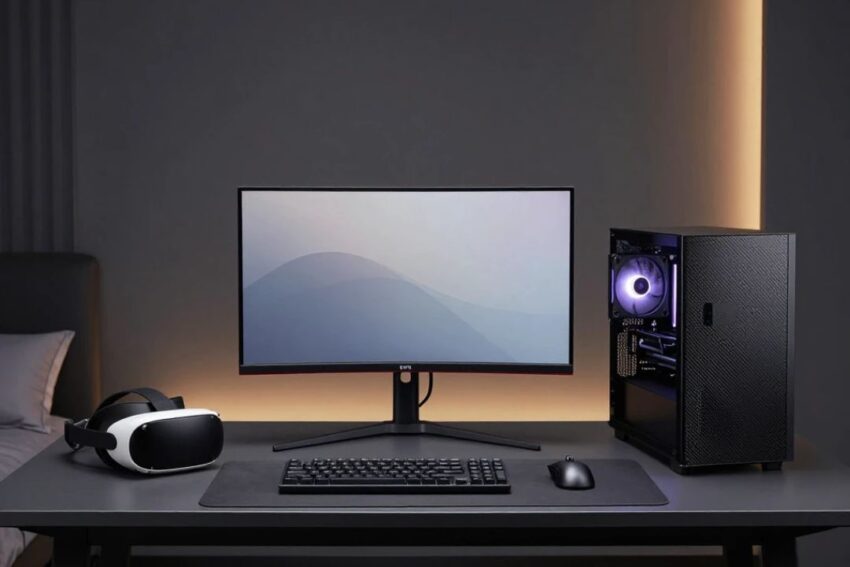
Introduction
The gaming industry is entering an exciting new era in 2026. Powerful processors, advanced graphics cards, high-refresh-rate displays, faster storage, AI-powered features, cloud gaming, and next-generation consoles are changing how players experience modern games.
Gaming is no longer just about having a powerful PC or console. Today’s gaming ecosystem includes AI, advanced GPUs, immersive displays, high-speed networking, sophisticated controllers, portable gaming devices, and optimized software.
For competitive players, hardware performance can make a major difference. For casual gamers, newer technologies can deliver better graphics, smoother gameplay, and more convenient gaming experiences.
This guide explores the most important gaming technology and hardware trends in 2026, including gaming PCs, GPUs, CPUs, monitors, consoles, storage, peripherals, handhelds, and emerging innovations.
What Is Gaming Technology & Hardware?
Gaming hardware refers to the physical components and devices used to play games.
These include:
- Gaming PCs
- CPUs
- GPUs
- Gaming consoles
- Monitors
- Gaming keyboards
- Gaming mice
- Headsets
- Controllers
- SSDs
- RAM
- Gaming routers
- Handheld gaming devices
Gaming technology is broader and includes software, AI, cloud gaming, graphics technologies, networking, game engines, and other innovations that improve the gaming experience.
1. Next-Generation Gaming GPUs
The graphics processing unit, or GPU, remains one of the most important components of a gaming system.
Modern GPUs are designed to deliver:
- Higher frame rates
- Better textures
- Advanced lighting
- Ray tracing
- AI-powered image technologies
- Higher-resolution gaming
High-end GPUs are especially important for players using 4K displays or demanding graphical settings.
Why GPUs Matter
The GPU processes much of the visual information displayed on the screen. A stronger graphics card can allow gamers to increase resolution, visual quality, and frame rates.
2. AI-Powered Gaming Graphics
Artificial intelligence is becoming increasingly important in gaming graphics.
AI technologies can help improve image quality without requiring games to render every pixel at native resolution.
Potential Benefits
AI-powered graphics technologies can provide:
- Higher frame rates
- Improved image quality
- Better upscaling
- Reduced rendering workload
- Enhanced visual effects
This is particularly useful for demanding games running at high resolutions.
3. Ray Tracing
Ray tracing creates more realistic lighting, reflections, shadows, and environmental effects.
Traditional rendering methods can approximate lighting, while ray tracing attempts to simulate how light behaves.
Why Ray Tracing Matters
It can make games look more realistic by improving:
- Reflections
- Shadows
- Lighting
- Ambient effects
The challenge is that ray tracing can require significant GPU processing power, making specialized hardware and optimization important.
4. High-Performance Gaming CPUs
The CPU is another essential component of a gaming PC.
Modern processors provide:
- Multiple cores
- High clock speeds
- Advanced cache systems
- Improved efficiency
- Better multitasking
A powerful CPU can help maintain high frame rates, especially in CPU-intensive games.
CPU vs GPU
The GPU handles much of the graphical workload, while the CPU manages game logic, physics, AI, background processes, and other calculations.
A balanced system requires both components to work effectively together.
5. DDR5 Gaming Memory
RAM affects how quickly a gaming system can handle active applications and game data.
Modern gaming PCs increasingly use advanced memory technologies.
Benefits of Faster RAM
Faster memory can help with:
- Game performance
- Multitasking
- Content creation
- Large game environments
- System responsiveness
For gaming PCs, having enough memory is often more important than simply choosing the highest possible memory speed.
6. PCIe NVMe SSDs
Solid-state drives have transformed gaming storage.
Compared with traditional hard disk drives, SSDs can provide much faster data access.
Benefits
Gaming SSDs can improve:
- Game loading times
- Operating system startup
- File transfers
- Application responsiveness
Modern NVMe SSDs use high-speed interfaces to provide extremely fast storage performance.
7. 4K Gaming
4K gaming continues to be an important goal for high-end gaming hardware.
A 4K display provides significantly more pixels than a standard Full HD display.
Benefits
Players can experience:
- Sharper images
- More detailed environments
- Better textures
- Greater visual clarity
However, 4K gaming requires considerable GPU performance, particularly when advanced graphics settings are enabled.
8. High-Refresh-Rate Gaming Monitors
Gaming monitors are becoming faster and more responsive.
High-refresh-rate displays can offer:
- Smoother motion
- Lower perceived blur
- More responsive gameplay
Competitive gamers often prioritize refresh rate and response time because fast-moving games can benefit from smoother visuals.
Important Monitor Features
When choosing a gaming monitor, consider:
- Refresh rate
- Resolution
- Response time
- Panel technology
- Adaptive sync
- HDR support
- Screen size
9. OLED Gaming Displays
OLED technology is becoming increasingly attractive for gamers.
OLED displays can provide:
- Deep blacks
- High contrast
- Fast response times
- Excellent image quality
These characteristics make OLED displays particularly appealing for cinematic games and competitive gaming.
However, buyers should consider factors such as cost, brightness, and long-term display characteristics.
10. Gaming Consoles
Consoles remain a major part of the gaming industry.
Modern consoles provide optimized hardware and software designed specifically for gaming.
Console Advantages
- Easy setup
- Consistent hardware
- Exclusive games
- Controller-based gaming
- Simple software management
Console gaming can be particularly attractive for players who do not want to build or upgrade a PC.
11. Gaming PCs
Gaming PCs provide extensive flexibility.
Players can customize:
- CPU
- GPU
- RAM
- Storage
- Cooling
- Case
- Power supply
- Monitor
Advantages
Gaming PCs can offer:
- High performance
- Upgradeability
- Customization
- Mod support
- Access to a large game library
- Support for productivity tasks
A carefully balanced PC can deliver excellent gaming performance without requiring every component to be the most expensive option.
12. Gaming Laptops
Gaming laptops combine portability with high-performance hardware.
Modern gaming laptops can include powerful:
- CPUs
- GPUs
- Displays
- Cooling systems
- SSDs
Why Choose a Gaming Laptop?
They are useful for players who:
- Travel frequently
- Need a portable computer
- Want gaming and productivity in one device
The main trade-offs can include weight, battery life, heat, and price compared with desktop systems.
13. Handheld Gaming Devices
Portable gaming devices are becoming increasingly popular.
Modern handhelds can provide PC-style gaming in a portable form.
Features
They may include:
- Integrated controllers
- High-resolution screens
- Powerful mobile processors
- SSD storage
- Wireless connectivity
Handheld gaming allows players to access larger game libraries while traveling or away from a traditional gaming setup.
14. Gaming Keyboards
A gaming keyboard can provide features designed for fast and precise input.
Popular features include:
- Mechanical switches
- Programmable keys
- RGB lighting
- Anti-ghosting
- Adjustable actuation
- Low-latency connections
Competitive players may prefer keyboards that offer fast response and customizable controls.
15. Gaming Mice
Gaming mice are designed for precise movement and quick responses.
Important features include:
- High-precision sensors
- Adjustable sensitivity
- Lightweight designs
- Programmable buttons
- Wireless connectivity
Competitive Gaming
For competitive games, a responsive mouse can make precise aiming and rapid movement easier.
16. Wireless Gaming Headsets
Modern gaming headsets provide both convenience and immersive sound.
Important features include:
- Wireless connectivity
- Surround or spatial audio
- Noise isolation
- Detachable microphones
- Long battery life
Spatial Audio
Advanced audio technologies can help players understand the direction of sounds within a game environment.
This can be especially useful in competitive shooters.
17. Gaming Controllers
Controllers remain essential for console gaming and are also popular among PC players.
Modern controllers can offer:
- Wireless connectivity
- Adjustable controls
- Improved ergonomics
- Vibration feedback
- Advanced triggers
Some premium controllers also provide customizable buttons and interchangeable components.
18. Gaming Chairs and Ergonomics
Gaming hardware is not limited to electronics.
Comfort is important during long gaming sessions.
A good gaming setup should support:
- Proper posture
- Comfortable seating
- Appropriate desk height
- Good monitor positioning
- Adequate lighting
Ergonomics can improve comfort and help reduce unnecessary strain during extended sessions.
19. Gaming Routers and Low-Latency Networking
Online gaming depends heavily on network quality.
A gaming-focused networking setup can help prioritize gaming traffic and improve connection stability.
Important Factors
Players should consider:
- Internet speed
- Latency
- Connection stability
- Wi-Fi performance
- Ethernet connectivity
For competitive gaming, consistent low latency is often more important than having the highest possible download speed.
20. Cloud Gaming
Cloud gaming allows games to be processed on remote servers and streamed to users.
This can reduce the need for extremely powerful local hardware.
Advantages
Cloud gaming can provide:
- Device flexibility
- No large game installation
- Access to powerful remote hardware
- Convenient gaming
Challenges
The experience depends heavily on:
- Internet speed
- Latency
- Server availability
- Connection stability
21. Game Streaming Technology
Game streaming and content creation continue to grow.
Modern gaming PCs can support:
- Live streaming
- Video recording
- Gameplay editing
- Broadcasting
Players and creators may use specialized hardware such as capture cards, microphones, webcams, and dedicated streaming systems.
22. AI in Game Development
AI is influencing not only gaming hardware but also game development.
Developers can use AI for:
- Testing
- Animation
- Asset creation
- NPC behavior
- Game balancing
- Development assistance
AI-driven systems may help developers create larger and more dynamic game worlds.
23. More Intelligent NPCs
Non-player characters are becoming more sophisticated.
Traditional NPCs generally follow predefined behavior.
AI technologies could allow future NPCs to:
- Respond more dynamically
- Adapt to player behavior
- Follow more complex strategies
- Generate varied interactions
This could make game worlds feel more responsive.
24. Virtual and Augmented Reality Gaming
VR and AR continue to expand gaming possibilities.
Virtual reality places players inside digital environments, while augmented reality combines digital elements with the real world.
Applications
These technologies can provide:
- Immersive gameplay
- Interactive experiences
- Fitness gaming
- Social gaming
- Simulation
As hardware becomes more comfortable and affordable, immersive gaming could continue to grow.
25. Gaming Hardware Trends for 2026
Several major trends are shaping the gaming hardware market.
Faster GPUs
Graphics performance continues to improve.
Better AI Upscaling
AI can help deliver high-quality images at improved frame rates.
Faster Storage
Modern SSDs reduce loading times.
High-Refresh Displays
Competitive gamers increasingly value smooth gameplay.
Portable Gaming
Handheld devices are expanding gaming beyond traditional platforms.
Wireless Accessories
Wireless keyboards, mice, headsets, and controllers are becoming more capable.
How to Build a Balanced Gaming Setup
Buying the most expensive hardware is not always the best strategy.
A balanced gaming setup should match the hardware to your gaming goals.
For Casual Gaming
Prioritize:
- Reliable CPU
- Mid-range GPU
- Enough RAM
- SSD storage
- Good monitor
For Competitive Gaming
Focus on:
- High-refresh-rate monitor
- Fast CPU
- Responsive GPU
- Low-latency mouse
- Reliable networking
For 4K Gaming
Prioritize:
- Powerful GPU
- Capable CPU
- Fast SSD
- High-quality 4K display
For Portable Gaming
Consider:
- Gaming laptop
- Handheld gaming PC
- Battery life
- Weight
- Display quality
Benefits of Modern Gaming Technology
Modern gaming technology provides several advantages.
Better Graphics
Advanced GPUs and displays create more realistic game worlds.
Faster Performance
Modern CPUs and GPUs support higher frame rates.
Faster Loading
SSDs reduce waiting times.
Greater Immersion
Advanced audio, displays, VR, and controllers improve immersion.
More Portability
Handheld gaming devices allow players to play in more locations.
Better Connectivity
Modern networking supports online multiplayer and cloud gaming.
Challenges of Gaming Hardware
Gaming technology also has challenges.
High Prices
High-end GPUs, monitors, and gaming systems can be expensive.
Power Consumption
Powerful hardware can require substantial electricity.
Heat
High-performance components generate considerable heat.
Compatibility
Some components may require specific motherboards, power supplies, or software.
Rapid Upgrades
New hardware generations can make older components less attractive.
Future of Gaming Technology
The future of gaming will likely involve greater integration between hardware and software.
AI could create smarter NPCs and improve graphics. Faster GPUs could enable more realistic worlds. Cloud gaming could make high-end games accessible on more devices.
At the same time, handheld gaming may continue to grow, while VR and spatial computing could create new forms of interactive entertainment.
The gaming PC itself may also become increasingly optimized around AI acceleration, high-speed storage, and advanced connectivity.
Frequently Asked Questions
What is the most important gaming hardware in 2026?
The GPU remains one of the most important components for graphical gaming performance, while the CPU, RAM, SSD, and monitor also play major roles.
Is a gaming PC better than a console?
It depends on the player’s priorities. PCs offer customization and upgradeability, while consoles provide convenience and consistent hardware.
Is 4K gaming worth it?
4K can provide excellent image quality, but it requires more powerful hardware and a suitable display.
Are gaming laptops good for modern games?
Yes. Modern gaming laptops can provide strong performance while offering portability.
Are gaming handhelds worth buying?
Handhelds can be attractive for players who value portability and want access to larger game libraries outside a traditional gaming setup.
Does internet speed affect gaming?
Yes, but latency and connection stability are often more important for responsive online gaming than raw download speed.
Conclusion
Gaming technology and hardware in 2026 are transforming the way players experience games. Powerful GPUs and CPUs are delivering better performance, while AI-powered graphics technologies are helping games achieve improved visual quality and higher frame rates.
At the same time, 4K and OLED displays, high-refresh-rate monitors, fast NVMe SSDs, wireless peripherals, advanced controllers, gaming laptops, handheld devices, cloud gaming, and VR are expanding the possibilities of modern gaming.
The future is likely to bring even smarter AI systems, more capable robots and virtual characters, faster hardware, more immersive displays, and increasingly portable gaming experiences.
For gamers, the best setup is not necessarily the most expensive one. The ideal hardware depends on the type of games played, preferred resolution, target frame rate, budget, and whether portability is important.
As gaming technology continues to evolve, one thing is clear: the next generation of gaming hardware will make games faster, more immersive, more intelligent, and more accessible than ever before.