
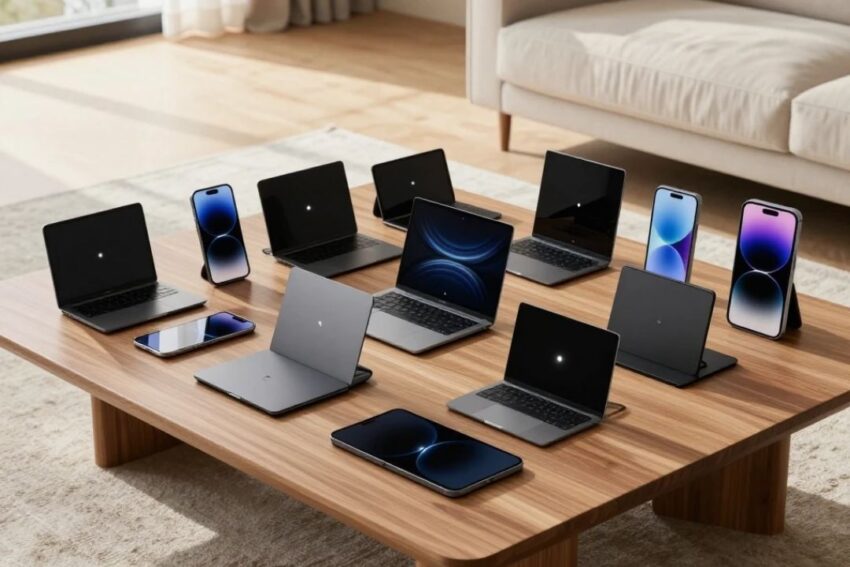
Technology has changed the way we work, communicate, travel, exercise, relax, and manage our homes. Today, smart gadgets are no longer limited to technology enthusiasts. From smart speakers and wireless earbuds to fitness trackers and smart-home devices, technology has become an everyday part of modern life.
The right gadgets can make daily routines more convenient, improve productivity, save time, and even help reduce unnecessary energy consumption. However, with thousands of products available, choosing the right devices can be difficult.
Smart living does not mean buying every new gadget available. It means choosing useful technology that solves real problems and fits naturally into your daily routine.
In this article, we will explore 15 must-have tech gadgets for smart living. These gadgets cover productivity, entertainment, home automation, personal wellness, security, travel, and everyday convenience.
1. Smart Speaker
A smart speaker is one of the easiest ways to introduce smart technology into your home.
Modern smart speakers can play music, answer questions, set reminders, provide weather information, control compatible smart-home devices, and perform other voice-based tasks.
Instead of reaching for your phone every time you need basic information, you can simply use a voice command.
Smart speakers can also act as a central part of a smart-home system. You can connect compatible lights, plugs, thermostats, and other devices and control them using your voice.
When choosing a smart speaker, consider sound quality, privacy controls, compatibility with other devices, and the quality of its voice assistant.
2. Smart LED Lights
Smart lighting can make your home more comfortable and convenient.
Smart LED bulbs allow users to control brightness, color, and schedules through a smartphone application or voice commands.
For example, you can create a schedule that automatically turns lights on in the evening and off at bedtime.
You can also create different lighting scenes for different activities. Bright light may be useful while working, while softer lighting can create a more relaxing atmosphere at night.
Smart LED bulbs can also help reduce unnecessary energy usage when automated schedules are used effectively.
They are relatively simple to install, making them a good starting point for beginners interested in smart-home technology.
3. Smart Plugs
Smart plugs are small devices that can turn ordinary appliances into connected devices.
Once a device is connected to a smart plug, you can often control its power remotely or create automated schedules.
For example, you could schedule a lamp to turn on at a specific time or automatically switch off a device after a certain period.
Smart plugs are useful because you do not need to replace every appliance with an expensive smart version.
Before buying one, check its maximum power rating and make sure it is compatible with your preferred smart-home ecosystem.
4. Smart Thermostat
A smart thermostat can make temperature management more convenient and efficient.
Traditional thermostats require manual adjustments, while smart thermostats can automate temperature settings based on schedules, preferences, and sometimes occupancy.
Some models can be controlled remotely through a smartphone, allowing you to adjust the temperature before arriving home.
Smart thermostats can also provide information about energy usage and help users understand their heating or cooling habits.
The exact benefits depend on your home, climate, heating or cooling system, and thermostat compatibility.
If you want to make your home more automated while potentially improving energy management, a smart thermostat can be a valuable upgrade.
5. Smart Security Camera
Home security is another area where technology can provide useful benefits.
Smart security cameras allow homeowners to monitor selected areas of their property through a smartphone or other connected device.
Depending on the model, features may include motion detection, notifications, night vision, two-way audio, and cloud or local storage.
Some cameras also offer intelligent detection features that can distinguish between different types of movement.
Privacy should always be considered when installing smart cameras. Use strong passwords, enable available security features, keep firmware updated, and carefully choose where cameras are placed.
A smart security camera can provide additional awareness when you are at home or away.
6. Video Doorbell
A smart video doorbell combines a traditional doorbell with a camera and connected features.
When someone approaches your door, compatible video doorbells can send a notification to your phone and allow you to see who is there.
Many models also include two-way communication, allowing you to speak with visitors remotely.
This can be useful when you are away from home or when you simply want to know who is at the door without opening it.
As with smart security cameras, privacy and data protection should be important factors when choosing a video doorbell.
7. Wireless Noise-Canceling Headphones
Wireless headphones are useful for work, entertainment, travel, and relaxation.
Noise-canceling models can reduce surrounding sounds, making it easier to focus on music, podcasts, videos, or calls.
For remote workers, good headphones can improve the quality of online meetings. For travelers, noise cancellation can make long journeys more comfortable.
When choosing headphones, consider comfort, sound quality, battery life, microphone performance, connectivity, and noise cancellation.
If you spend several hours each day listening to audio, investing in comfortable and reliable headphones can significantly improve your daily experience.
8. Wireless Earbuds
If portability is more important than large headphones, wireless earbuds are an excellent alternative.
They are small, lightweight, and easy to carry. Many models provide features such as noise cancellation, touch controls, transparency modes, and voice assistant integration.
Wireless earbuds are particularly useful for commuting, exercising, making calls, and listening to podcasts.
Battery life is an important consideration. Look for earbuds with a charging case that provides additional battery capacity.
Comfort is equally important because earbuds that do not fit properly can become uncomfortable during long listening sessions.
9. Smartwatch
A smartwatch can act as a small personal assistant on your wrist.
Modern smartwatches can display notifications, track workouts, monitor activity, control music, provide navigation, and perform other tasks.
Fitness features can help users understand their daily activity and exercise habits.
Many smartwatches can also work with smartphone applications, making it possible to check important information without constantly taking out your phone.
Before buying a smartwatch, check compatibility with your smartphone, battery life, available apps, and the features that are most important to you.
10. Fitness Tracker
If you are mainly interested in health and activity tracking rather than smartphone features, a fitness tracker may be a better choice than a full smartwatch.
Fitness trackers are usually lightweight and designed primarily around activity monitoring.
Depending on the device, they may track steps, workouts, heart-rate information, sleep patterns, and other fitness metrics.
Some users prefer fitness trackers because they are simple and can have longer battery life than feature-rich smartwatches.
Remember that consumer fitness devices provide estimates and tracking information; they should not automatically be treated as professional medical equipment.
11. Smart Air Purifier
Indoor air quality is an important part of a comfortable home environment.
A smart air purifier can filter airborne particles and may provide information about indoor air conditions.
Some connected models can automatically adjust their operation based on detected conditions and allow users to monitor performance through a smartphone application.
When choosing an air purifier, consider the size of the room, filter type, replacement cost, noise level, energy consumption, and availability of replacement filters.
A smart model can be particularly useful for people who want more information and automation from their home appliances.
12. Robot Vacuum Cleaner
Cleaning is one of the most time-consuming household tasks, which makes robot vacuum cleaners attractive smart-home gadgets.
Modern robot vacuums can navigate rooms, detect obstacles, create maps, schedule cleaning sessions, and automatically return to their charging stations.
Some advanced models can also mop floors or automatically empty their dust containers.
The biggest advantage is convenience. You can schedule cleaning while you are working, sleeping, or away from home.
However, robot vacuums still work best when floors are reasonably organized and certain obstacles are removed.
When shopping for one, consider navigation technology, battery life, cleaning performance, app quality, replacement parts, and maintenance requirements.
13. Portable Power Bank
A power bank is one of the most practical gadgets for modern life.
Smartphones, earbuds, tablets, cameras, and other devices all depend on rechargeable batteries. A portable power bank provides backup power when you are away from an electrical outlet.
This is particularly useful for travelers, commuters, students, outdoor enthusiasts, and remote workers.
When buying a power bank, look at its capacity, charging speed, USB-C support, number of ports, size, and safety features.
A compact model is convenient for everyday carrying, while a larger model may be better for extended travel.
14. E-Reader
For people who love reading, an e-reader can be a useful addition to a smart lifestyle.
Instead of carrying multiple physical books, an e-reader can store a large digital library in a lightweight device.
Many e-readers use displays designed to provide a more paper-like reading experience and can offer long battery life.
E-readers are useful for students, travelers, professionals, and anyone who reads regularly.
They can also reduce the physical space required to store books.
When choosing an e-reader, consider screen size, storage, battery life, lighting, waterproofing, file compatibility, and access to your preferred digital bookstore.
15. Smart Display
A smart display combines many features of a smart speaker with a screen.
The display can show weather information, calendars, recipes, timers, photos, video content, and compatible smart-home controls.
This makes smart displays particularly useful in kitchens, bedrooms, offices, and living rooms.
For example, you can follow a recipe while cooking without repeatedly touching your phone. You can also view reminders or control compatible smart-home devices from the screen.
When choosing a smart display, consider screen size, speaker quality, privacy controls, supported services, and compatibility with your existing devices.
Benefits of Using Smart Gadgets
Smart gadgets can provide several benefits when they are chosen carefully.
Convenience
Automation reduces the number of small tasks you need to perform manually.
Lights can turn on automatically, thermostats can follow schedules, and robot vacuums can clean floors without requiring constant attention.
Better Productivity
Technology can help organize schedules, manage reminders, communicate with others, and create a more efficient working environment.
Energy Management
Smart lighting, plugs, thermostats, and appliances can provide better control over energy usage.
Improved Security
Connected cameras and video doorbells can provide additional awareness of activity around your home.
Entertainment
Wireless audio devices, smart displays, speakers, and other gadgets can improve your entertainment experience.
How to Choose the Right Smart Gadgets
Having more technology does not necessarily mean having a smarter lifestyle.
Before purchasing a gadget, think about whether it solves a real problem.
Check whether it works with your existing devices and preferred smart-home platform. Also consider privacy, security, battery life, software support, and long-term costs.
For connected home devices, pay particular attention to data collection and account security. Use strong, unique passwords and enable multi-factor authentication whenever it is available.
You should also consider maintenance costs. A device may seem affordable initially but become expensive if it requires costly subscriptions, batteries, filters, or proprietary accessories.
The Future of Smart Living
Smart living will continue to evolve as artificial intelligence, connected devices, and automation become more advanced.
Future gadgets are likely to become better at understanding user preferences and automating everyday tasks.
Artificial intelligence will also play a larger role in connected devices. Instead of simply responding to commands, smart systems may increasingly anticipate routine needs and provide more personalized assistance.
However, convenience should always be balanced with privacy and security.
Consumers should understand what data their devices collect, how that information is stored, and who can access it.
Conclusion
The 15 must-have tech gadgets for smart living can make everyday life more convenient, organized, productive, and enjoyable.
Smart speakers, LED lights, smart plugs, thermostats, security cameras, video doorbells, wireless headphones, earbuds, smartwatches, fitness trackers, air purifiers, robot vacuums, power banks, e-readers, and smart displays all offer different benefits.
You do not need to purchase all of them. The best approach is to identify the areas of your life where technology can provide the most value and choose gadgets accordingly.
A truly smart lifestyle is not about owning the largest collection of technology. It is about using the right technology in the right way.
By choosing useful, reliable, secure, and compatible gadgets, you can create a smarter home and a more convenient digital lifestyle without unnecessary complexity.