
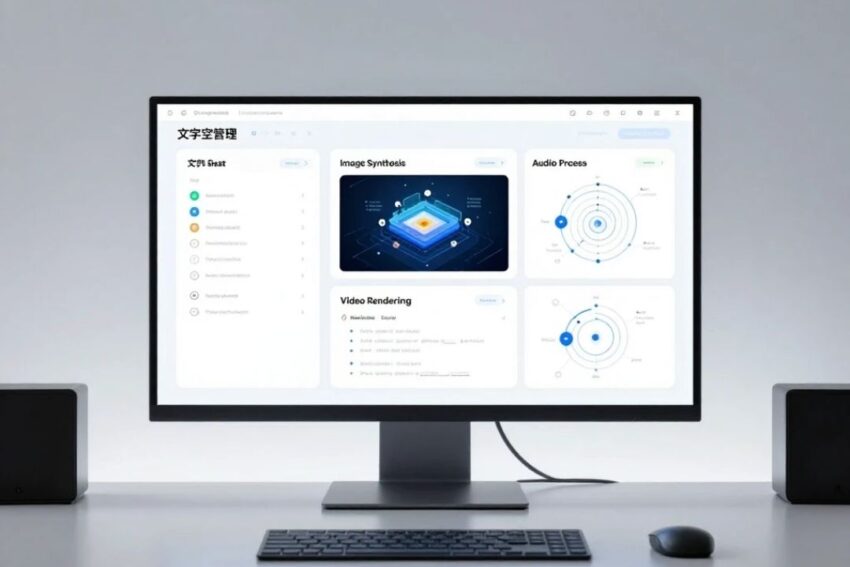
Artificial intelligence has changed dramatically in recent years. AI is no longer limited to analyzing data, recognizing patterns, or answering simple questions. Today, AI can create entirely new content, including articles, images, videos, music, voice recordings, presentations, and computer code.
This technology is known as Generative AI.
Generative AI has become one of the most important technology trends in 2026. From businesses and marketers to students, developers, designers, and content creators, millions of people are using generative AI to produce content faster and explore new creative possibilities.
But how does generative AI actually work? How can a computer create an image from a few words? How can AI write an article that sounds human? How can it generate realistic voices and videos?
In this article, we will explain what generative AI is, how generative AI works, and how AI creates text, images, video, and audio. We will also explore its benefits, limitations, real-world applications, and future impact.
What Is Generative AI?
Generative AI is a type of artificial intelligence that can create new content based on patterns it has learned from large amounts of data.
Traditional AI is often designed to analyze information or make predictions.
For example, a traditional AI system might determine whether an email is spam.
Generative AI can do something different. It can create a new email, write a story, generate an image, produce a video, or create a piece of music.
In simple terms:
Traditional AI analyzes information. Generative AI creates new information.
Generative AI can produce many different types of content, including:
- Text
- Images
- Videos
- Audio
- Music
- Computer code
- Presentations
- Designs
- 3D assets
The quality of these systems has improved significantly, making AI-generated content increasingly difficult to distinguish from human-created content in some situations.
How Does Generative AI Work?
Generative AI systems are trained using large amounts of data.
Depending on the type of AI, this data can include books, articles, websites, images, videos, audio recordings, code, and other forms of information.
During training, the AI learns patterns and relationships within the data.
It does not simply memorize everything it sees. Instead, the model learns statistical patterns that allow it to generate new outputs based on instructions.
For example, a language model learns relationships between words, sentences, concepts, and ideas.
An image-generation model learns patterns related to colors, shapes, objects, textures, styles, and visual relationships.
A video-generation model learns how visual elements can change over time.
An audio model learns patterns related to speech, pronunciation, tone, rhythm, and sound.
After training, the model can use what it has learned to generate new content.
How AI Creates Text
AI-generated text is one of the most widely used forms of generative AI.
Tools powered by large language models can write articles, emails, stories, product descriptions, social media posts, summaries, scripts, and much more.
How Does AI Generate Text?
When you give an AI model a prompt, it analyzes the words and context you provide.
For example, you might ask:
“Write a 500-word article about the benefits of electric vehicles.”
The AI identifies important parts of the request, including:
- The topic
- The desired length
- The format
- The writing style
- The intended purpose
It then predicts what words and sentences should come next based on patterns learned during training.
Modern language models generate text one part at a time while considering the context of what has already been produced.
This allows them to create paragraphs that are connected and relevant to the original instruction.
What Can Generative AI Do With Text?
Generative AI can help with almost every stage of the writing process.
It can:
- Generate article ideas
- Create outlines
- Write blog posts
- Rewrite content
- Summarize documents
- Improve grammar
- Translate text
- Create social media captions
- Write emails
- Generate stories
- Create video scripts
- Explain difficult topics
- Generate computer code
This makes generative AI particularly useful for content creators, businesses, students, and professionals.
However, AI-generated text should not automatically be considered accurate. AI systems can sometimes produce incorrect information or confidently state things that are not true.
Human review is still important.
How AI Creates Images
AI image generation has become one of the most exciting applications of generative AI.
Today, users can describe an image using natural language and ask an AI system to create it.
For example:
“Create a realistic image of a futuristic city at sunset with flying vehicles.”
The AI can generate an image based on that description.
But how does it do this?
How AI Image Generators Work
Many modern AI image-generation systems use a process involving patterns, representations, and image generation.
A simplified explanation is that the model learns relationships between text descriptions and visual features during training.
For example, the model may learn that words such as “dog,” “mountain,” “sunset,” and “car” are associated with particular visual patterns.
When you provide a prompt, the system uses these learned relationships to generate an image that matches the description.
Many popular image-generation systems use a technique called diffusion.
In simple terms, a diffusion model learns how to transform random visual noise into a meaningful image.
The process starts with something that looks like random noise.
The AI gradually removes that noise while moving toward an image that matches the user’s prompt.
The final result can be a detailed image created entirely by AI.
What Can AI Image Generators Create?
Generative AI can create many types of visual content, including:
- Photorealistic images
- Illustrations
- Digital artwork
- Product concepts
- Logos and design ideas
- Characters
- Backgrounds
- Marketing visuals
- Concept art
- Social media graphics
- Architectural concepts
AI image generation is particularly useful for creators who need visual ideas quickly.
Instead of spending hours creating an initial concept, designers can generate several ideas in minutes and then refine the best one.
How AI Creates Video
AI video generation is another rapidly developing area of generative AI.
AI video tools can generate short video clips from text descriptions, images, or existing footage.
For example, a user might enter:
“A cinematic shot of a futuristic train traveling through a snowy mountain landscape.”
An AI video model can generate a moving sequence based on the description.
Some systems can also animate still images or modify existing video footage.
How AI Video Generation Works
AI video generation is more complicated than image generation because the system must understand both visual content and time.
The AI needs to create individual frames while maintaining consistency between them.
For example, if a person appears in a video, the AI needs to keep their appearance relatively consistent as they move.
Similarly, objects need to move naturally from one frame to another.
Modern video-generation models learn patterns from large collections of video and other visual information.
They learn relationships between:
- Objects
- Movement
- Camera angles
- Lighting
- Environments
- Human actions
- Time
The model can then use these patterns to create new video sequences.
What Can AI Video Tools Do?
Generative AI can assist with:
- Text-to-video generation
- Image-to-video animation
- Video editing
- Background replacement
- Visual effects
- Short-form videos
- Marketing videos
- Product demonstrations
- Animated content
- Social media videos
AI video tools are becoming particularly valuable for marketers and content creators who need to produce large amounts of video content.
However, AI-generated video can still contain strange movements, inconsistent objects, or unrealistic details. Human editing is often necessary for professional results.
How AI Creates Audio and Voice
Generative AI can also create realistic speech, sound effects, and music.
AI voice-generation systems can convert written text into natural-sounding speech.
For example, you can provide a script and ask an AI system to read it in a specific style.
The AI can generate speech with different:
- Voices
- Accents
- Speaking speeds
- Tones
- Emotional styles
- Languages
This technology is known as text-to-speech.
How AI Voice Generation Works
AI voice models are trained on large collections of speech recordings.
During training, the model learns patterns related to pronunciation, rhythm, tone, pauses, and other characteristics of human speech.
When you provide text, the system converts the written words into a form that the AI can use to generate speech.
The result is an audio recording that can sound remarkably natural.
AI voice technology is now being used for:
- YouTube videos
- Podcasts
- Audiobooks
- Advertisements
- Online courses
- Video games
- Virtual assistants
- Educational content
However, voice cloning creates important ethical and security concerns. A person’s voice should not be cloned or used without appropriate permission.
How AI Creates Music
Generative AI can also create music.
AI music systems can generate melodies, rhythms, harmonies, instruments, and sometimes complete songs based on instructions.
For example, a creator might request:
“Create relaxing background music for a travel video.”
The AI can generate music that matches the requested mood.
AI-generated music can be useful for creators who need background tracks, sound experiments, or musical inspiration.
At the same time, questions about copyright, ownership, training data, and the rights of musicians remain important topics in the development of AI music technology.
Generative AI for Content Creators
Content creators are among the biggest beneficiaries of generative AI.
A creator can now use AI throughout the entire production process.
For example:
Step 1: Generate a content idea.
Step 2: Create an outline.
Step 3: Write the script.
Step 4: Generate images.
Step 5: Create or edit video.
Step 6: Generate a voiceover.
Step 7: Add music and sound effects.
Step 8: Create social media clips.
This workflow can significantly reduce production time.
Instead of spending days creating a single piece of content, creators can use AI to accelerate many of the repetitive stages.
However, the creator still needs to provide the strategy, creative direction, quality control, and final judgment.
Generative AI in Business
Businesses are also using generative AI to improve productivity.
Companies can use AI to create:
- Marketing campaigns
- Product descriptions
- Business reports
- Presentations
- Customer-support content
- Advertising concepts
- Training materials
- Internal documentation
- Social media content
Generative AI can also help employees brainstorm ideas and summarize large amounts of information.
For small businesses, AI can provide capabilities that previously required several different specialists.
Benefits of Generative AI
Generative AI offers several major advantages.
1. Faster Content Creation
AI can generate a first draft, concept, or visual in seconds or minutes.
2. Lower Production Costs
Businesses and creators can reduce the amount of manual work required for certain tasks.
3. More Creativity
AI can generate ideas that users may not have considered themselves.
4. Personalization
AI can create different versions of content for different audiences.
5. Easy Experimentation
Creators can quickly test different styles, concepts, and formats.
6. Increased Productivity
AI allows people to spend less time on repetitive work and more time on creative and strategic tasks.
Limitations of Generative AI
Despite its impressive capabilities, generative AI is not perfect.
AI Can Make Mistakes
AI-generated text may contain inaccurate information.
AI Can Produce Low-Quality Content
Without good instructions and human editing, AI output can sound generic.
Copyright Questions
AI-generated content raises complicated questions about training data, ownership, and intellectual property.
Lack of Human Experience
AI can imitate patterns, but it does not experience the world in the same way humans do.
Bias
AI models can reproduce biases found in their training data.
Privacy Concerns
Users should be careful about entering confidential or sensitive information into AI systems.
For these reasons, AI should be treated as a powerful tool rather than an infallible source of truth.
Generative AI vs Traditional AI
The difference between traditional AI and generative AI can be explained simply.
Traditional AI is often used to:
- Classify information
- Detect patterns
- Predict outcomes
- Recognize objects
- Recommend products
- Identify fraud
Generative AI is used to:
- Create text
- Generate images
- Produce videos
- Generate audio
- Create code
- Develop new designs
Traditional AI focuses heavily on analysis and prediction, while generative AI focuses on creation.
What Is the Future of Generative AI?
Generative AI is likely to become even more powerful over the next several years.
AI systems will increasingly be able to work across multiple formats at the same time.
For example, a user may provide a written idea and ask AI to create:
- An article
- A presentation
- Images
- A video
- A voiceover
- Social media posts
This type of technology is known as multimodal AI.
The boundaries between writing, design, video production, and audio production are becoming less distinct.
Generative AI may eventually become a standard part of creative software, business applications, education platforms, and everyday productivity tools.
Will Generative AI Replace Content Creators?
This is one of the biggest questions surrounding AI.
The answer is not straightforward.
Generative AI can replace some repetitive production tasks, but it does not eliminate the need for human creativity.
The most successful creators are likely to be those who learn how to work with AI rather than simply compete against it.
AI can generate a video, but a human still needs to decide what story the video should tell.
AI can write an article, but a human needs to determine whether the information is useful, accurate, original, and relevant to the audience.
AI can create an image, but a designer may still need to decide whether the image fits the brand.
The future is therefore likely to involve human creativity combined with AI capabilities.
Final Thoughts
Generative AI has transformed the way digital content can be created.
From writing articles and generating images to producing videos, voiceovers, music, and code, AI can now assist with almost every stage of the creative process.
The technology works by learning patterns from large amounts of data and using those patterns to generate new content based on user instructions.
In 2026, generative AI is no longer just an experimental technology. It is becoming a practical tool for businesses, students, marketers, developers, designers, and content creators.
However, using AI effectively requires more than simply pressing a button.
The best results come when humans provide clear instructions, creative direction, fact-checking, editing, and quality control.
Generative AI should not be viewed only as a replacement for human creativity. Instead, it can be viewed as a powerful creative partner that helps people turn ideas into reality faster.
The future of content creation will likely belong to people who know how to combine human imagination with artificial intelligence.
Frequently Asked Questions
What is generative AI?
Generative AI is artificial intelligence that can create new content such as text, images, videos, audio, music, and computer code based on user instructions.
How does generative AI create content?
Generative AI models learn patterns from large amounts of training data. When a user provides a prompt, the model uses those learned patterns to generate new content that matches the request.
Can AI generate realistic images?
Yes. Modern AI image generators can create highly detailed and realistic images from text descriptions. They can also create illustrations, artwork, designs, and other visual content.
Can AI create videos?
Yes. AI video-generation tools can create short videos from text or images and can also assist with editing and visual effects.
Can AI generate human-like voices?
Yes. Modern text-to-speech systems can generate highly realistic voices from written text. Voice cloning is also possible, but it should only be used with appropriate permission.
Can generative AI create music?
Yes. AI music tools can generate melodies, rhythms, background music, and other musical content based on user instructions.